



View on Amazon
Introduction: The Enduring Allure of a Classic
In the ever-evolving landscape of games, where digital realms and complex rulebooks often dominate, there is a profound and enduring power in a classic. Certain games transcend generations, not through flashy graphics or convoluted mechanics, but through the purity of their design and the timeless nature of their challenge. Standing as a titan among these enduring favorites is a simple grid-based strategy game that has captivated minds for decades. It is a game where the objective is immediately clear, the rules can be grasped in moments, but the path to mastery is a lifelong pursuit. This is more than just a children’s pastime; it is a perfect storm of strategic depth and accessible fun, a battleground where two players engage in a silent, thoughtful duel of wits. It represents a cornerstone of family game collections worldwide, a testament to the idea that the greatest games are often the simplest.
First Impressions: A Sleek, Modern Take on a Classic Design
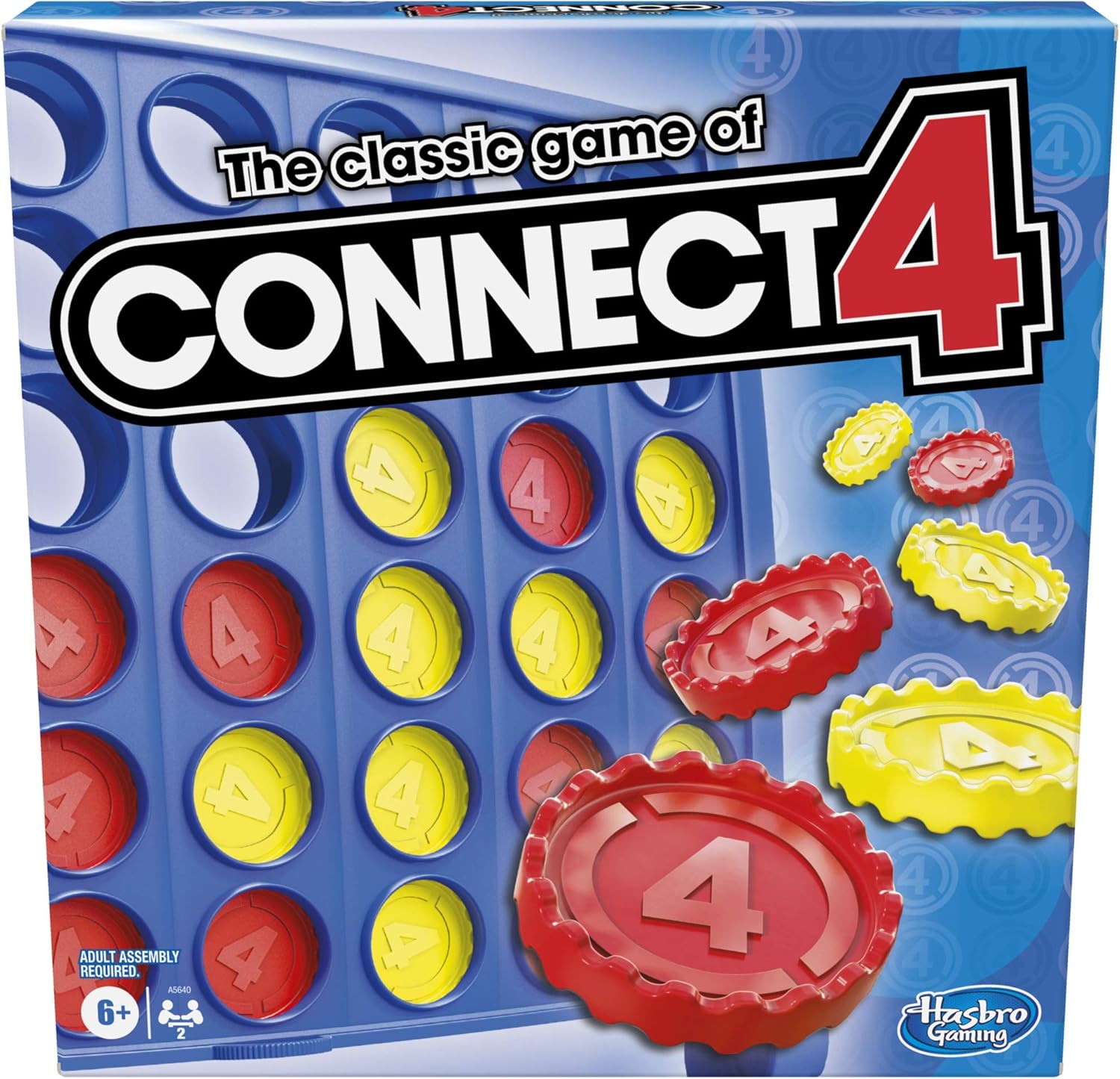
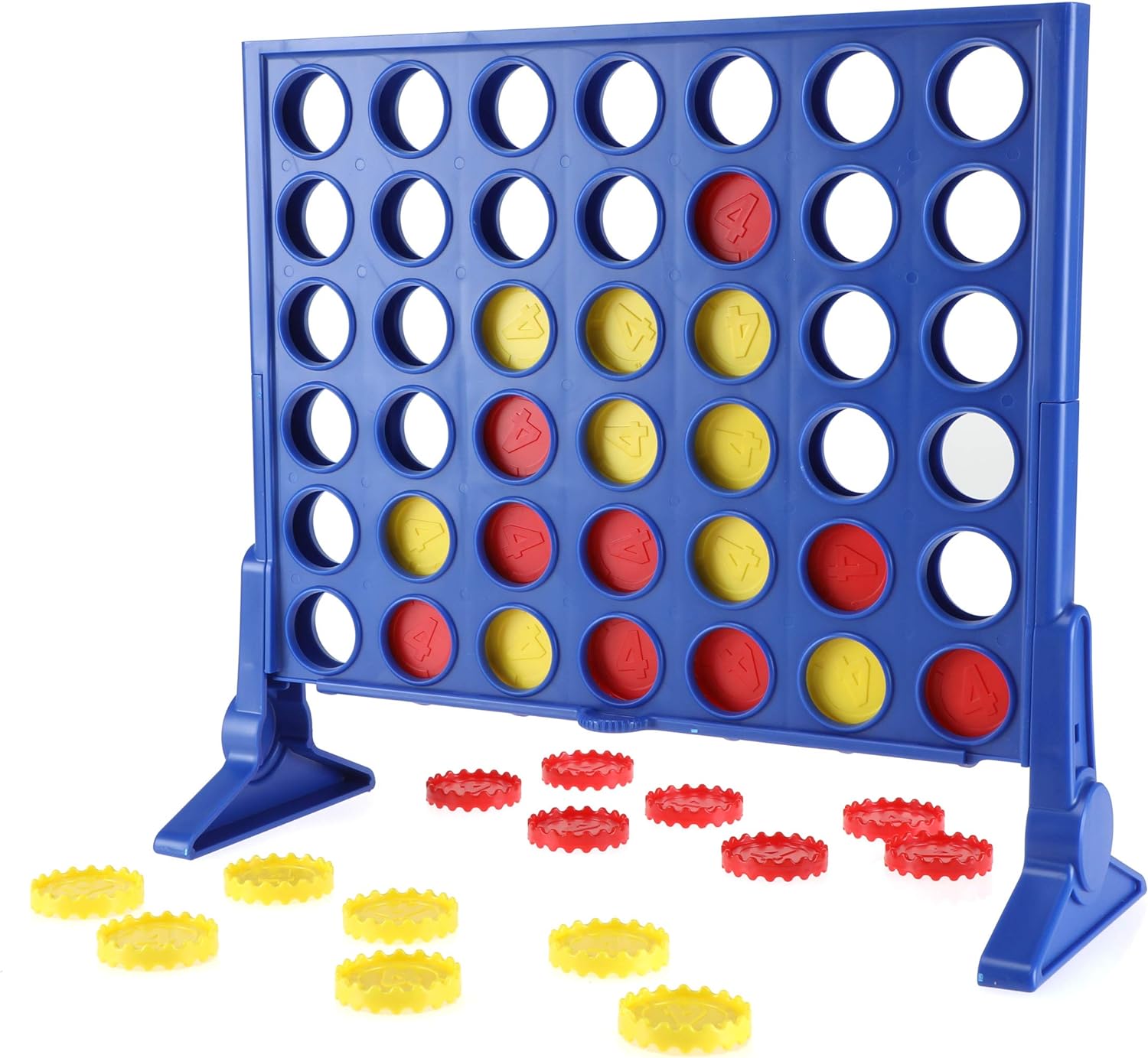
Unboxing this modern iteration of the classic game reveals a product that respects its heritage while embracing a contemporary aesthetic. The iconic vertical grid is instantly recognizable, but it now features a sleek, streamlined profile and a color scheme that feels fresh and modern. The classic red and black checkers have often been replaced with vibrant red and gold discs, adding a touch of brightness to the gameplay. The build quality is robust, designed to withstand the click-clack of discs being dropped and the satisfying finality of the victory lever. The components are minimal—the grid, the discs, and the sliding lever—which underscores the game’s focus on pure, unadulterated strategy. The setup is instantaneous; within seconds of opening the box, the grid is standing, the discs are sorted, and the challenge is issued.
The Foundation of the Game: Core Rules and Objectives
The genius of the game lies in its effortless learnability. The objective is stated right in the name: connect four of your colored discs in a row. This can be achieved vertically, horizontally, or diagonally. Players take turns dropping one of their discs into any of the seven columns. The disc falls to the lowest available space within that column, governed by the simple, inescapable law of gravity. This straightforward mechanic is the foundation upon which immense strategic complexity is built. There are no dice rolls, no card draws, and no hidden information. The entire state of the game is visible on the grid, making it a pure test of foresight, planning, and tactical adaptation. A game can be a blisteringly fast showdown or a slow, methodical battle of attrition, often decided by a single, well-placed disc.
The Strategic Depths: More Than Just a Simple Drop
To the uninitiated, the game might appear to be a matter of random chance. However, beneath the surface of this accessible kids’ game lies a deep well of strategic possibility that has been the subject of serious mathematical analysis.
The Power of Control and The Center Column
Experienced players understand that control of the center column is often the key to victory. A disc placed in the center has the potential to form part of a line in more directions—horizontally, vertically, and diagonally—than a disc placed on the edge. The early game often becomes a subtle fight for influence over the central columns, setting up multiple potential threats that an opponent must constantly address.
The Art of Creating Multiple Threats
The fundamental strategy revolves around creating “double threats.” This occurs when a player sets up their pieces in such a way that they have two different ways to connect four on their next turn. Since an opponent can only block one threat per turn, a successfully executed double threat guarantees a win. Learning to see and create these opportunities is the hallmark of a skilled player.
The Defensive Stance: Blocking and Counter-Attacking
A significant portion of gameplay is defensive. Every move an opponent makes must be scrutinized not just for its immediate offensive potential, but for the threats it sets up for future turns. A player must constantly ask, “Where can my opponent win next?” and act to block that path. The best players seamlessly blend defense with offense, using their blocking moves to simultaneously advance their own strategic position, turning their opponent’s aggression into an opportunity.
Expanding the Experience: Variations on a Classic
The modern classic grid version often introduces official variations that breathe new life into the familiar format, offering a delightful twist for veteran players.
The Frenzy Variation
This variation throws the turn-based structure out the window. Both players have their entire set of discs at the ready and can drop them into any column at any time, as fast as they can. This transforms the contemplative strategy game into a frantic, high-energy race of speed and dexterity. It’s a fantastic way to shift the dynamic completely, testing reflexes and quick thinking under pressure.
The Pop-Out Variation
This ruleset changes the endgame in a fascinating way. In addition to dropping a disc from the top, a player can, on their turn, choose to “pop out” one of their own discs from the bottom of a column. This causes all discs in that column to fall down one space. This rule introduces a whole new layer of strategic depth, as players can disrupt seemingly stable formations, reclaim key pieces, and open up unexpected winning avenues from the bottom of the grid.
The Cognitive and Educational Benefits
While its primary function is entertainment, the game serves as a powerful, stealthy educational tool. It is a gymnasium for the developing mind.
-
Strategic Thinking and Planning: Players learn to think several steps ahead, anticipating their opponent’s responses and planning complex sequences of moves.
-
Pattern Recognition: The brain becomes adept at scanning the grid for potential lines of four, both for themselves and their opponent, a key cognitive skill.
-
Spatial Reasoning: Understanding how the discs interact in a three-dimensional space (within the vertical grid) is an excellent exercise in spatial awareness and logic.
-
Problem-Solving: Each turn presents a new puzzle: how to advance one’s own position while mitigating the threats posed by the opponent.
The Perfect Game for Families and Beyond
Its versatility is a key component of its enduring success.
An Intergenerational Bridge
This is one of the rare games where a six-year-old can genuinely compete with a grandparent. The rules are simple enough for a child to understand, yet the strategy is deep enough to engage an adult fully. This creates a level playing field for shared family time, fostering connection and friendly competition without frustration.
A Staple for All Occasions
Its quick playtime makes it ideal for a short burst of fun before dinner, during a playdate, or as a classroom activity. Its durable, self-contained nature also makes it a excellent travel game, providing entertainment on road trips or vacations without taking up much space.
Conclusion: A Timeless Testament to Simple Genius
In a world filled with fleeting trends and complex entertainment, the enduring presence of this classic grid game is a comforting constant. It is a masterpiece of minimalist design, proving that profound depth can emerge from a set of simple rules and a clear objective. It is a game that teaches as it entertains, challenging the mind while bringing people together across generations. It is more than just a toy; it is a tool for cognitive development, a catalyst for social interaction, and a shared cultural touchstone. Whether you are revisiting it from your own childhood or introducing it to a new generation, the thrill of sliding that final disc into place, completing a line of four, and declaring “I win!” remains as potent and satisfying as ever. It is, and will likely always be, a perfect game.